Showing posts with label blog #8. Show all posts

Thursday, January 12, 2012

Blog #8 - Urbanized

When I started watching Urbanized, the latest film from Gary Hustwit of Helvetica and Objectified fame, I expected to be interested on an intellectual level. I didn't expect to cry, which is not something I frequently experience while watching a movie in the middle of the afternoon. We'll get to that, but first, the film is about the design of cities, which is such a complex subject because of the multitude of people and forces that come into play. Architects, politicians, zoning, public opinion… there are more factors in the formation of a city than I can hold in my head. That's why it was so interesting to see places where good ideas had been implemented well and were improving the quality of life. There were also examples of good intentions gone wrong, usually to the detriment of landscape preservation.

One of the cities featured in the movie was Phoenix, Arizona, a place I visited once a couple summers ago. Urbanized cites Phoenix as the worst offender of what has been called "sprawl." While visiting, we found it was impossible to get anywhere without a car, most trips requiring a short drive on one of the highways. Residential areas are winding streets lined with squat, cookie-cutter homes painted in southwestern desert colors with palm trees and cacti out front. In the movie, a representative of Phoenix laments the fact that the growing city is eating up the beautiful desert, but he defends Phoenix against being labelled "sprawl." He insists that Phoenix is maintaining the population density it has always had. This happens, of course, at the cost of destroying the landscape. Toward the end of the interview, the man says frankly that he likes having a house, yard, pool, and car, and that's what it comes down to. His preferred lifestyle simply comes at the expense of destroying the desert.

Later, the movie moves to the city of Stuttgart, Germany. We are introduced to two warring sides on the issue of a project called Stuttgart 21, which includes the construction of a high-speed rail system. The mayor explains the project as a necessary step for the city, replacing the aging and largely unusable tangle of older tracks and the crumbling station with a futuristic, eco-friendly underground railway. He had a beautiful model, and honestly, I was sold. Next we were introduced to the protesting members of the public, who were numerous. It turns out some of them quite like their crumbling old station. More than that, though, they like the beautiful park full of humongous and irreplaceable ancient trees that would have to be removed in order for construction on the railway to begin. One resident speaks of how important these gorgeous trees are, telling the story of the townspeople during Germany's great depression searching for any scrap of wood to burn for warmth, but leaving the trees untouched. Just as I came around to the anti-Stuttgart 21 side, the scene changed to a recording of workers with chainsaws slicing through the ancient trees while riot police beat back screaming townspeople. As I said, I didn't expect to cry during this movie, especially not because of Germans cutting down trees, but watching these powerless people cry out in despair as corporate-backed politicians literally uprooted their past really got to me. Some things are worth more than "development." There are more important ideas in this world than "progress." I was so sold on the idea of a high-speed train, but in the end, I was reminded of this excerpt from Douglas Adams' classic book, The Restaurant at the End of the Universe, which takes place after the complete demolition of the Earth by alien bureaucrats.
The trouble with most forms of transport, he thought, is basically one of them not being worth all the bother. On Earth—when there had been an Earth, before it was demolished to make way for a new hyperspace bypass—the problem had been with cars. The disadvantages involved in pulling lots of black sticky slime from out of the ground where it had been safely hidden out of harm's way, turning it into tar to cover the land with, smoke to fill the air with and pouring the rest into the sea, all seemed to outweigh the advantages of being able to get more quickly from one place to another—particularly when the place you arrived at had probably become, as a result of this, very similar to the place you had left, i.e. covered with tar, full of smoke and short of fish.

Monday, December 12, 2011

Blog #8


The Environment and Preservation

One part of my life that was well influenced by environmental preservation was the presence of indoor gardens or greenhouses in Chicago. Now, these sites were not considered the “environment” to the point at which they were large landscapes being protected and watched over by the government, but the acts of privet owners and volunteers to bring the rare, the natural and the beautiful into the lives of us urban folk. The Garfield Park conservatory is one of the most beautiful and complete greenhouses I have ever seen. The Garfield Park Conservatory is one of the largest and most stunning conservatories in the nation. Often referred to as "landscape art under glass," the Garfield Park Conservatory occupies approximately 4.5 acres inside and out, and includes ] thousands of plants that are grown each year for displays in City parks and spaces. Garfield Park Conservatory is located in Garfield Park — an 184-acre site located on Chicago's redeveloping Westside designed as a pleasure ground by William LeBaron Jenney — and is the oldest of the three great original Westside parks (Humboldt, Garfield, and Douglas). Their mission statement is that :

The Garfield Park Conservatory Alliance, a non-profit organization, strengthens community through the unique combination of the Garfield Park Conservatory Campus, other botanical resources, and the engagement of community members. With its innovative programs, the Alliance enhances the environmental, social and economic vitality of Chicago’s West Side and encourages the larger community to explore the fundamental connection between plants and human life.”

Because the conservatory is located in such a devastated area in Chicago it is often looked over, yet it is somehow never ignored. The people that the site brings in often have to face and notice the area surrounding the conservatory, thus making it impossible to ignore. This space is not only open for educational purposes, art exhibitions, (like the best on I ever saw, the Chihuly glassworks exhibit!) parties and other events, but also just the regular patron who wants to experience nature from all corners of the globe. I have seen butterfly exhibits, plants I never would unless I traveled thousands of miles, and art that can only be appreciated in such a vast and creative environment. Like I said, this is not a spot of wilderness, but a carefully tended slice of nature nestled into the urban landscape opening up the ability to experience nature, art, history and science all at once, in one area. It is something worth investing time and money into, because it holds natural wonders and beauties inside glass that otherwise could be lost, or frankly, never discovered, by anyone but those who seek out botany as one of their life missions. Such organizations should be saved and supported both communally and governmentally, though it is somehow the responsibility of the people of Chicago to maintain and care for this apex of environmental preservation.

Thursday, November 10, 2011

Urban Geography & Preservation


Today, people of all generations can see the history of social and economic relations in our own communities and how they have changed our modern urban landscapes globally. To come to the realities of today, social landscapes had begun to majorly evolve during the uprising of many new forces of production after WWII. "The automobile industry successfully converted back to producing cars, and new industries such as aviation and electronics grew by leaps and bounds (cite)". At the same time, the jump in postwar births, known as the "baby boom," increased the number of consumers (cite). More and more Americans joined the middle class and began to embrace all of the new and exciting changes that were happening everywhere. It was at this point that American society forever sought the phantasmagoria surrounding them; driving consumerism faster than ever before. In the cities people were most concerned about building the tallest skyscraper humanly possible; big glass structures that protruded out of their landscapes with masses of concrete creating a high contrast between past, present as well as providing a glimpse for the future. American society had begun to change the way they built structures and sites along with the materials.

Historical Materialism is a study of society, economics, and history and provides fundamental ideas to help us understand how we were left with the modern city of today. "The system determines that there is always a division of labour into social classes based on property ownership where some people live from the labour of others (cite)." This class division is dependent on the forces of production at that moment in time and more than ever consumerism was a driving force in all decision making. Post WWII left the cities overpopulated with industries booming. Soon after, the people affected most by these industrial changes were the people who had lived in these social landscapes prior to the city, building their cultural heritage in these environments. It was then the "indigent" people of the city had to succumb to the changing economic and social status', leaving many displaced. These "indignent" residents were now able to see social problems unfold in the urban area including-gentrification, polarization, segregation, urban conflict, the use of public space, urban politics, and the role of finance and crisis in shaping urban landscapes (cite)".


We can see historical materialism truths in Seoul during its Yongsan tragedy of 2009. Seoul's population has nearly doubled since 1970 and is currently the eighth-most populated city in the world. With their booming economy and high demand for public housing Seoul is finding it very hard to provide for these needs. In response to these dire circumstances Seoul started redeveloping huge areas to meet housing demands for middle and upper-class inhabitants. But as true for American society, this has left lower-income residents and small-business owners helpless. Seoul's redevelopment plan created a social unrest among many communities and disgruntled people everywhere started to demonstrate. On January 9th, 2009, during a demonstration by upset civilians, Seoul police decided to take matters in their own hands and became violent with demonstrators. The result was the death of 5 demonstrators and 1 police office. This is an extreme example of how dependent society is on preservation in urban geography. Overall, one could say gentrification of these rice fields is inevitable, but how can you revitalize and preserve one's cultural heritage and social landscape while creating an economic uprising? Maybe the question will never be answered but we can look at the instance of gentrification in Seoul as a representation of societies value on social and cultural landscapes.

Wednesday, November 9, 2011

Glenwood Canyon

This past August, I went to Vail, Colorado to visit my boyfriend for two weeks. I had never been there during the summer so I was very excited to see what beauty the city holds. Now don't get me wrong, it's gorgeous there but the bar was raised when my boyfriend surprised me with a trip to one of America's most scenic roadways, Glenwood Canyon.

There are no pictures out there that will do this canyon justice! It's definitely one to go and see in person. Glenwood Canyon is on I-70 in western Colorado about 150 miles west of Denver. The 16 mile long canyon is on the Colorado River between the towns of Glenwood Springs and Gypsum. A challenge was taken in the 1980's to complete one of the last stretches of the Interstate. In the end, the freeway snaked through using tunnels and bridges to create the highway but in no way did it hurt or contribute to the gorgeous appearance this canyon holds.

The canyon was formed by the Colorado River. With the canyon being 16 miles long, it has steep to sheer cliff sides rising on either side of the river with creeks and small canyons branching off from it.

In the early 20th century, the state highway was starting to get underway and became part of SH 4. In 1926, the US Highway routes were developed and the route through Glenwood Canyon was proposed to be part of US 46. Since then, there have been many changes to what the highway was connected to and renumbered. Then in 1937, US 6 was lengthened to western from Denver and was co-marked with US 24 through the canyon. During this time the canyon was just gravel until the Depression. U.S. Representative Edward Taylor got $1.5 million for widening and paving the canyon road.

It wasn't until the 1960's when the federal government approved an extension for I-70 to go west from Denver to Utah. The first part was completed in 1965. This included two bores for the No Name Tunnels and bypassed the Horseshoe Curve section of the canyon. The second part (Dotsero) of I-70 was built by 1982 but the section from No Name to Dotsero would be the most difficult to complete due to rejections of costs, distances and road closures during the winter season.

Overall, this gorgeous canyon is one for the books. This is "one of the most scenic sections of roadway, one of the last sections of Interstate Highway to be built, a construction project that brought never-before-used-construction methods to the U.S. and one of the greatest engineering achievements of the U.S." (Matthew Salek).

Tuesday, November 8, 2011

Underground Railroad

I live in the town of Merton near Sussex. On the main street in Merton there is a house that was part of the underground rail road and the elementary school would go to the house every year when they were studying the Civil War. I remember being shocked as a little kid to see it first hand and understand what lengths the slaves had to endure in order to make the trip and it was very evident all the risks the owners had to undertake by how hidden the cellar was.

Recently there was an article in the news paper my mother was reading about how a rundown house, which was said to be a safe house to hide slaves, on the corner or Highway 164 and Lisbon Road was going to be demolished because the Wisconsin Department of Transportation deemed the house of no historical value. The reason for demolition of the house was because traffic going into sussex was increasing and they needed to expand the road to accommodate the amount of cars on a daily basis. Immediately two thoughts came to mind. One, being that yes there is a lot more traffic due to the recent development in the area. However, if hours worth of traffic flow is accepted because they wanted to save the veterans cemetery by miller park then why is it not the same case in this situation? The reason why the house in Merton was salvaged was because the new owners of the property did what was necessary for repairments and made a strong case for a house museum deal with the neighboring schools for educational purposes. If the safe house was fixed up and the community was actively involved I believe the preservationists who were trying to save the house would have had more of a chance of saving it. I remember passing the house when my mother told me exact location and I remember it looking like a house that was in a disarray with broken windows, crooked siding, and over grown with weeds. Its sad to see that because of unmotivated owner who lacks pride in his own property a piece of history was demolished. With all the opportunities to gain tax incentives or even loans for historically significant landmarks I find it to be impossible that the owner was not eligible for any of them. I also found extremely ironic that it was the Department of Transportation that deemed the building to have no historic value.

It does seem like it is harder to preserve landmarks then it is to build them now a days. It also got me thinking about the field trips we have in class. If the community is unaware of the landmarks significance then it has a far smaller chance of being preserved. The educational system should find more ways to utilize this landmarks that instead of useless field trips that kids take to a park or imax. Being able to experience a part of history first hand is not only a lot more inspiring to the students but it also allows the children to have a better understanding of the community they live in. As the world becomes more heavily populated more and more landmarks like these will be taken down. It may seem like one little house has not a lot of value in the large scheme of things but when they all start disappearing it's not like we can recreate the past.

Cape Wind

I go every summer to Hyannis, Massachusetts to visit some friends that live out in that area. Hyannis is “A” on the map, part of Cape Cod.


Whenever I am there I see signs all over protesting “Cape Wind”, a wind farm project that will be offshore Horseshoe Shoal in Nantucket Sound (off Cape Cod).


First, what is a wind farm though? They are groups of wind turbines used to produce electric power. Wind farms may contain several hundred individual wind turbines, and cover an extended area of land. The farms can either be inland or offshore.


The cape project has been fought by the Alliance to Protect Nantucket Sound, formed to oppose the proposal because it will construct 400-foot tall wind turbines in the middle of Nantucket Sound. Nantucket Sound is known for its wildlife and natural beauty, residents are afraid that the wind farm will destroy that. But a 2010 poll by the Boston Globe showed that 69% of residents supported Cape Wind. So, why all the fuss? Robert Whitcomb, Vice President and Editorial Page Editor of the Providence Journal, argues that the battle over Cape Wind involves a powerful, privileged minority imposing their power on the majority. Robert maybe are partly right, a lot of “big names” have opposed the construction of the farm including late Sen. Ted Kennedy, Sen. John Kerry, former Gov. Mitt Romney, and businessman Bill Koch.


I personally feel that looking out at the ocean and seeing these big spinney things (a wind farm) would take away some of the beauty. I am for wind power, but why pick a place a lot of people come to visit for the view.


I also find it interesting that if this were “back in the day” there would be no controversy because seeing a big wind turbine would be considered progress, but now it is not, sort of. “Cape Wind” will liking be the first offshore wind energy project in United States coastal waters.

Monday, November 7, 2011

Devil's Lake

One of my favorite places to visit over the summer has to be Devil’s lake here in Wisconsin. It is a gorgeous national park with several facilities in which to camp or do any recreational activities. On the other hand, it is a very popular destination for tourists of both Wisconsin and the surrounding states thus causing the issue of overuse in areas.

For the times that I have gone to Devil’s lake I really enjoyed the lush and beautiful scenery, it was also a very clean park with paved roads and campgrounds that are easily accessible and rather affordable. There are options to rent cabins and canoes to kayaks and so on. All in all there are several things to do and with the money the park generates all are offered and maintained. The way the park is layed out maximizes natural space with winding roads going through it and thousands of miles of twisting trails to hike and bike through. Thus the park designers had a good sense of expansion as the years went by as new elements were added, making the preservation and modern use of this natural environment a good example of successful park preservation.

On the other hand, over one million people visit this park a year making the park seem less of a natural space then a habited tourist destination. There are always groups of people spread out within the park making the illusion of going out into a natural space seem quaint. The park sure didn’t look the same as it did when the explorers first met the native Americans living in the area. Furthermore, I rock climbed at Devils Lake before. It is always a blast and loads of fun climbing around the rock formations. Unfortunately, many natural faces have been worn down and some even impossible to climb because of the hundreds of climbers that hack carabineers into the rock to clip into while lead climbing. As nice as it would seem that natural rock climbing is the thing to be doing at Devil’s Lake, the original condition of the rock faces has long gone. Devil’s Lake as well as other major national parks seem to be too well preserved at times being subject the millions of people that explore and inhabit the parks each year.

Yerkes Observatory


While on Fall break, my boyfriend and I took a day trip to Williams Bay, 10 miles from Lake Geneva. We set out to visit Yerkes Observatory, which once housed the world’s largest refracting telescope. The telescope is still there, however, other larger refracting telescopes now exist.

As we pulled up the observatory, I was in awe. The building is astonishing and is engraved and sculpted with incredible detail in the style of terracotta design. The pictures sculpted into the architecture had stories within them. Pictures of moons, fish, people, and a variety of different

animals, took up the majority of the ornamentation. There is a figure

carved into many of the columns supporting the front entrance that appears to be William Rainey Harper, the first president of the University of Chicago. At one time, there was a hornet perched on the nose of the figure stinging it and making it swell. A theory is that George Ellery Hale considered the swollen nose to “gross” and around 1900, requested that the hornets be removed. The architect, Henry Ives Cobb, let his imagination run wild while designing the building. However, his last wishes before his death were to have the plans burned.

When we walked inside, I was by no means disappointed by what I saw. The ornamentation on the inside foyer was just as magnificent as the outside. Since an observatory was a place for learning and discovery, owls perched all around the border of the room to symbolize wisdom.

The building was proposed by astronomer George Ellery Hale and financed by Charles Tyson Yerkes. The observatory was established in 1897. The grounds were designed by John Olmsted, brother of Frederick Law Olmsted. The building and telescope is property of the University of Chicago and only used for educational purposes. In 2005, the university

announced that it had plans to sell the property and there were plans to put a resort on the 77-acre lot along with an array of luxury homes. But in 2007, the university suspended the plans. The observatory stands as a symbol of a combination of technology and architectural advances in the late 19th and early 20th centuries.

A couple things I found interesting while on our tour was that the electronics system used in the dome housing the telescope is the original. I also learned that Albert Einstein studied at Yerkes.

I recommend to everyone to visit Yerke’s Observatory. The tour is free but donations are encouraged.

Northeast America

Two years ago, our family decided to take a trip to the Northeast part of this country. A journey by road that would first take us to Niagara Falls. It was magestic to see the reverence to such a monument of nature. Natural environments that have been around for many years and have captivated the eye of any person that's been in front of the waterfalls. In addition to its impacting stature, the sun mixes in with the mist of the waterfall to form rainbows. They certainly enhance the experience of being there and compliment all of the beautiful green areas around the falls. Niagara Falls has become a perfect place for tourism but even though there's been human intervention its very essence remains the same.

After Niagara, we went to Providence Rhode Island which forms an important part of the history of the United States because it is one of the first thirteen colonies of America. Its architecture and city planning reminds me of Milwaukee because of the overall feeling that it gives. It truly provides a sense of history and understanding of our culture as monuments rise in a gala fashion. Rhode Island is a very charming city with a lot of artistic value, but it wasn't until the next stop that I witness a natural gem.

It was in New Hampshire where I realized that I wanted to live in a place like it. Mostly because of its scenic views. It is a place where the interaction of nature and civilization came together wholesomely and almost purely adapted to the living necessities of one another. I grew up in a major city in the world so this was a big contrast for me but one that I liked very much. In New Hampshire we went to Mount Washington which is one of the tallest mountains in America and the only one that lets you experience different climates as you get closer to its peak. At first, I thought we would hike up the mountain and my initial thought when doing something like that is the time that it takes to get up there. I imagined that it would take about an hour to climb to the top and then a local person explained that it normally takes an average of 8 hours to hike up the mountain. We didn't have a lot of time so we got on a van and rode the mountain which took approximately one hour the whole way there. Throughout the ride you could really submerge into its nature and appreciate the beauty of its existence there. We stayed there for a night and in the early morning I went out for a run. Doing so, gave me an additional feel for the place. Everyone there seemed very adventurous and ready to do something outdoorsy and exciting which also influences the viewer to appreciate a place for what it is. Its relationship from Person to Place. From Nature and its inhabitants. From Plants and Civilizations in context to the overall nature of the universe Who forms an umbrella underneath it all, and its course remains the same unless its effect can be measured and understood for the benefit of our responsibility in administrating what we need to take care of.


The Stolen Land of Mount Rushmore


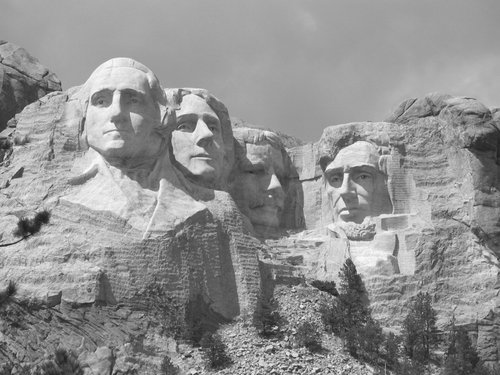
To spawn off of the classes discussion last week about Native American’s and preservation, one iconic topic that has since started to fade is the creation of Mount Rushmore. To many it is a historical landmark that celebrates the nation’s fathers: Washington, Lincoln, Jefferson, and Theodore Roosevelt. What has been lost in translation is the history of how this landmark came to be.

The Lakota tribe suffered defeat in the Great Sioux War in 1876 against the Americans. What this meant was that their land, the land that was fought on, was stripped from them. The mountain range on the land was called Six Grandfathers. It is interesting to note that though Americans stole the mountain, an interesting parallel of preservation happened in a unique way. While though we look at the definition to preservation as more of a physical, traditionally made, sort of way, the concept of intention has brought a new level to the table. With the fathers of our country now displayed at gigantic proportions, to the Native American’s the mountain was an ode to their own ancestors. I feel there might have been some sort of subconscious decision that went into creating the monument.

In the 1920’s, the process of Mount Rushmore began. Its original intent, that holds strong even to today, was to bring tourism up to the area where the monument was, South Dakota. Eventually the National Park Service began to work with making the monument to make it successful and complete project. From the beginning of its conception, Mount Rushmore was perceived as historically significant, and after the involvement of the NPS, the concept of preservation started to change to conservation.

We would only be fooling ourselves if we say that Mount Rushmore is being preserved when in actuality it is merely maintained. It was once a cherished mountain to the Native Americans; to say that we continued to preserve it after we sculpted the face of the mountain into a work of art is preposterous. We did indeed conserve the land in order to bring forth more visitors. The ironic thing is that after the defacing of the environment the NPS then declared it a place of conservation, and preceded with rules to further prevent destruction to the environment. Destruction not unlike what created Mount Rushmore in the first place.

My own opinion on Native American land preservation is from a very American stance. In a way Native American history is not part of American history, because it was pre-American. In the case of Mount Rushmore, I see it as land that was stolen but used in a similar manner. Mount Rushmore is dedicated to some of the greatest presidents that the country has had. We as people visit this spot as a remembrance of what this country is made up of. Similar to Native American culture, where the land was their religion, and they worshiped it in such a way that was respectful. Even though this spot was taken from blood, today we maintain at least the level of respect that the Native Americans once had for the area.

Sunday, November 6, 2011

In awe

I grew up in the small town of Waunakee ten minutes outside of Madison Wi. It was quiet, and pretty low key. As a kid you didn’t just stay inside, you went to the park, or snuck off into the closest wooded area and explored knowing that home was just a walk away. You could escape if you will, from a contained life of a town to one of freedom simply by sneaking off into the woods. I give this small background to relate to my current opposite way of living. I have lived in Milwaukee for 4 years now. I has been exciting and educational. There’s something different about living in a city. While this has been a good experience one which I do not regret I constantly find the city suffocating. I long for that little patch of woods I would escape to as a kid. The obvious is that this is a common reaction. I am not the first person to find myself in a different state when in the natural world. I think as obvious as it can be though that it can sometimes be overlooked. That we can easily take for granted the beauty we live in. The beauty that we for some reason shield ourselves from.


There exists a balance between nature and humans. No other species has affected the land like humans. This statement again is nothing new but what tends to be overlooked is how much the land we live on has affected us as well. So as stated in “The Natural Environment” by Charles E. Roe “ all efforts to protect land areas, even when motivated by objectives to preserve pieces of the natural landscape and ecological resources, also serve to protect parts of our cultural heritage.” While I find it hard to argue with this statement it brings to focus a somewhat sobering fact, and that is that there is very little if any of the land we live on that hasn't been touched by humans. So that raises the question what are we actually preserving? The natural world or ourselves as a species. I think you could make the argument either way. Myself I’m going to take the easy way out and say its both because there is no denying that the human species will always relate it back to themselves that were doing it for the good of the species and for future generations, this is the goal of every species to survive. But I also like to think there has to be something a little bit more nobel than that. That were still a bit taken back by the world we live in. That as a species we deep down know were not gods just hacks and that we still need to escape to our own little woods and be in simple awe of it.

Old or New?


After reviewing the supplied readings for this week, I decided to write about the two that most caught my eye: "The Dark Side of the American Dream", Sierra Club, and The Green Issue, "A Cautionary Tale." The first web article reviews the results of a report on sprawl, while the second argues the effects of green building as opposed to the preservation of old buildings. While these may seem like two disconnected topics, I found a common thread throughout both of them: preservation is more energy efficient than anything new, no matter how "responsibly" or "sustainably" built or planned.

When I was growing up, I remember getting magazines from the Sierra Club all the time. When I asked my mother what they were, she told me that she got them in the mail for free because she donated money to the Sierra Club. When I asked her what the Sierra Club was, she said something vague about nature and the environment, something that didn't really register with me. What did register, though, was the fact that my mother had donated, multiple times, to anything. I was raised for a lot of my life by a single mother who was raising five children on her own, no college degree, and no child support. My mother could barely afford food and heat for us, much less could she afford to donate to anyone or anything else. So the Sierra Club must have been vitally, crucially, important. And I now know that it is.

This report provides information on sprawl, the effects of urban flight to rural areas not set up to properly maintain heavy usage and population. These rural areas are affected by urban flight in many ways, including air pollution, water pollution, traffic congestion, and loss of not only natural resources such as land, but also the loss of indigenous plants, animals, and organisms that live on the land due to over development. This report also shared ways in which any cities in America are working to fight sprawl. Some cities are proposing, or have already put into effect, taxes that will go towards setting aside farmland and natural environments in the face of development. Many places have also established something called Urban Growth Boundaries. "An urban growth boundary is an official line that separates an urban area from its surrounding greenbelt of open lands, including farms, watersheds and parks. These boundaries protect the wide diversity of natural resources that wrap around population centers while funneling growth to areas with existing infrastructure" (1998). Still other cities across the U.S. have funneled money and energy into revitalizing existing towns and infrastructures, and approving places set aside as Open Space Revenues. Sprawl is a major problem in the United States, as urban flight puts pressure on the resources of areas not set up to accommodate larger populations.

The Green Issue: "A Cautionary Tale," provides that while building "green" is nice, preserving old buildings is better. Arguments made in the past that it was not as energy efficient to renovate or preserve old buildings in favor of building better, newer, even "green" ones, is just not true. Statistics now show that old buildings are green - they had to be. Buildings and homes used to be built according to the weather and resources available in a place, not just thrown up in any style that was trending at the moment. A great quote that was shared in this article that embodies the message is: "The greenest building is one that is already built" (Curtis). It costs more money and energy to tear down an existing structure and replace it with a new one, no matter how "green" the new one may be. Not only that, but think of all the waste created from the loss of the existing structure. Just makes no sense. A phrase that best describes this school of thought is Embodied Energy. This phrases maintains that old buildings already have stored energy, they are like fossil fuel repositories, places where we have already saved energy. This argues the waste involved in the energy usage it takes to build a new structure.

What I think ties these two articles together is the fact that they both argue the preservation of what is already here, available to us, rather than the development of the new. Whether the argument is for structures, roads, utility systems, or whole towns, the arguments to work with what we have is now stronger and more valid than it has ever been before, and will not be ignored.

Citations:

Curtis, Wayne. "A Cautionary Tale." Preservation Nation Homepage - National Trust for Historic Preservation. Preservation, Jan. 2008. Web. 06 Nov. 2011. .

"1998 Sprawl Report- Sprawl - Sierra Club." Sierra Club Home Page: Explore, Enjoy and Protect the Planet. Sierra Club, 1998. Web. 06 Nov. 2011. .


Saturday, November 5, 2011

Preserving Farms


When thinking about the importance of landscape preservation and its significance to our culture’s history, I am reminded of my family’s farm located in New Berlin, Wisconsin. Farms are a critical part of our American history, and even more so of our Wisconsin history. They are the foundation of this state, and, as Keller states, these “landscapes [have come] to be recognized in their own right as significant cultural resources” (Keller 189). We started as an agrarian society, so it is important for us to learn and understand the concepts associated with such a lifestyle. How would we explain farming to future generations if there were no farms left and they had nothing to compare them to? This realization is also starting to impact the public, which can been seen when Keller states, “There is a growing public awareness and even horror at the unprecedented growth in formerly rural areas and the loss of the tangible reminders of the nation’s agrarian past” (Keller 208). This is a scary thought, but also very real considering the rate at which farms are disappearing. According to the American Farmland Trust, seventy percent of farmland is headed towards commercial and residential development (Brown).

My family’s dairy farm has been in my family since 1896, when my great, great grandfather came from Mecklenburg, Germany and built a home for his family on the current land the farm occupies, which is depicted in the photos I have provided. However, over the past decade, the farm has been facing a serious threat: sprawl and commercial development. My mom and her brother, who both own the farm, have been in a constant battle to protect the place and land where they grew up. Highways have divided the farm, and some land is beginning to be picked off by commercial development. Where there used to be a large forest and swamp area where my mom would ride her horses, there is now a subdivision of houses and shopping centers. Developers are constantly inquiring about the land, and trying to acquire the prime real estate at a fraction of what it is worth, which is something I imagine most farmers are dealing with these days.

The surrounding farms in the area have all been consumed by big businesses such as strip malls, Walmart, and Kohl’s. However, despite these multi-million dollar complexes, many of the smaller strip malls remain vacant. Was it worth it for developers to tear down productive farms only to build a failure of a business complex? Many people do not think so, as can be seen when the Sierra Club states, Some communities that once welcomed development with open arms now consider the cost of lost farm land not worth the benefits of a new strip mall” (Brown). This issue upsets me because it hits so close to home. I would hate to see the beautiful hand-built farmhouse my family has had for generations torn down to make way for a Walgreens. I love visiting the farm, exploring the old house, and petting the cows. Losing all of this would be bad enough for me, and it would probably be devastating for my mom and uncle.


Preserving landscapes such as this enables future generations to learn about the benefits and importance of an agrarian lifestyle and business. It does not make a whole lot of sense to me that we are destroying the areas that grow our food and provide us with things necessary for our survival. I realize that a lot of our produce comes from other countries, but I would rather it come from our own. Eventually, all of our farmable land will be covered with suburbs and cities. Will sprawl have been worth it at that point; the point where we start to have food shortages? Instead of consuming the land that is important to our survival and heritage, we should look at how we can better utilize the areas that we have already built, and improve planning in those locations.


Works Cited

Brown, Ann, Carrie Collins, Tim Frank, Kim Haddow, Ben Hitchings, Sam Parry, Ginger Vanderpool, and Lida Wormser. "Sprawl: The Dark Side of the American Dream.” Sierra Club. Sierra Club, 2011. Web. 04 Nov. 2011. http://www.sierraclub.org/sprawl/report98/report.asp.

Keller, Genevieve P., and J. T. Keller. "Preserving Important Landscapes." A Richer Heritage: Historic Preservation in the Twenty-First Century. Chapel Hill: University of North Carolina, 2003. 187-222. Print.

Friday, November 4, 2011

Electricity and Preservation of the environment

While browsing through some of the readings, one excerpt in “Preserving Important Landscapes” by Genevieve P. Keller and J. Timothy Keller sprang out at me as something that is usually overlooked when speaking of preservation of natural environments. It stated that, “Telephone lines were sent underground or to the rear of the parking areas although clearly visible in the early twentieth-century photographs used for facade alterations.” This made me wonder how often it is thought of on how electricity in a natural environment that is being preserved can affect the visual aesthetics of that area. Certainly by burying the power lines you are ridding the viewer of the sight or knowledge that electricity is being moved through that area. However in some cases the power lines may play a key role in how that era looked and how items of that era (if preserving both a building(s) and the landscape around it) looked and were constructed to accommodate overhead power lines.

The role the power lines play in the visual understanding of that era are only a part of the whole picture when it comes to discussing electricity and nature. About the only time you see electricity and nature playing together is during a thunderstorm , so how do you incorporate something man made into a natural environment. Safety of course is a key player in this all, preservation or not. By burying the power lines you certainly decrease the chances of storms or winds causing problems by knocking down lines and hurting property, people, and the natural environment. As the natural environment, especially trees, grow and take up more space and intrude on the space of the power lines, trees are trimmed, and other vegetation cut and pruned to make way for the electricity, many times the vegetation is cut improperly and the end result leads to the damaged plant being cut down and removed all together…quite the opposite of preservation. Though burying seems to be the safest route for both people and nature, don’t overlook what must be done to get those power lines in the ground. Hundreds of yards of dirt and vegetation must be dug up and uprooted to make way for the electrical lines; yes it will eventually grow back but that may lead to problems such as roots damaging lines and natural erosion exposing lines causing possible harm to humans and wildlife.

Of course at the center of this all lies cost, if preservation is happening on public land then it will cost the tax payers, if on private land then it will cost the land owner, either way someone will have to pay. When dealing with overhead power lines one must think of the cost of towers and poles that will be built to hold the lines, proper weather resistant cable housings to protect the lines, as well as maintenance of the lines. So burying is obviously cheaper right, well it’s much more than just digging a hole and sticking some power lines in there. Power lines have to be buried at a specific depth, encased in a protective tubing to ward off damage to the lines, and every so often the lines need to surface to a transformer or other serviceable space so maintenance can be administered when needed.

THE Escape from Everyday


When I was completing my senior year of high school my psychical education instructor always reminded us that there was nothing quite like getting out of the city. She said, “We become trapped in this concrete jungle and its surprising how one hike in the woods can change a personality for weeks.” The class was called Adventure Ed, we went hiking or rock climbing or kayaking almost every week. But that reminder has often stuck with me. I easily spend 80 hours a week at MIAD, as most of you do, that’s why getting out of the city is even more important to me.


Last summer I ended up in Yellowstone National Park for maybe the third time in my life. That time it was different, it wasn’t about being a tourist or seeing everything that is well known in the park, it was just about getting out of the city and away from it all. Yellowstone would of not been complete with all the clothes smelling like a bonfire and the terrible instant coffee that takes 30 minutes while you wait for the water to boil. In that trip I had hit up 3 National Parks along the west coast. Glacier was the final stop. The snow was taller than me at the top of the peak. Although there were tons of people there the snowball fight was one of the most fun things of the trip. The views up the mountain were astonishing and the hiking was great.

Without the government making great strides in the preservation movement, who knows what those parks could have been today. They are a great learning experience when I was younger, interesting family trips when I was a teenager and escape backpacking trips as a I got older. The natural landscapes require a lot of upkeep and monitoring with the tourist around. They also provide an interesting viewpoint to see animals in their natural habitat. The National Park Service also makes a lot of the money to employ their staff from the tourist that visit every season.


Preservation does not only have to be on the national scale. Over fall break I ended up out in Delafield to go hiking in the Naga-Waukee State Park. Again this was a small entry fee to get in and it was right around the time where the staff was cleaning up the park for winter. They had the lawnmowers going to pick up the leaves. Easily I was the only visitor in the park that day. Although it was not a large park it was still big enough to get out of the city and be surrounded by trees and enjoy nature.


Sometimes it doesn’t have to be much to create an escape but without them we would run out of the green spaces we have and be stuck in the concrete forever. The preservation of parks is a great idea and I think we should keep making strides to save natural spaces.